Wednesday, January 25, 2012

When Ms. T becomes Mother T(heresa)....


In my handful of years teaching my particular population of students, I've come to find they generally fall into one of three categories.

The first--and most rare--is the category of students with issues in isolation from the rest of their family. In other words, their parents are normal. Perhaps their child's perplexing behaviors have driven them a bit batty over the years, but who could blame them? They are totally cognizant of the problem and they do their best to care for him/her while handing the reigns trustfully over to the teacher during school hours. Again, this scenario comes along about once every 10 kids.

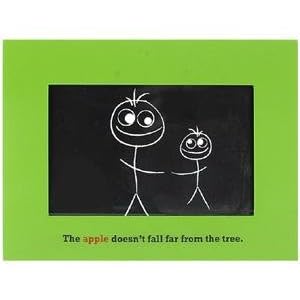
The second category of students--the most common--are those with emotional issues congruous with the rest of the family. They're the "apple doesn't fall far from the tree" kids, or better yet, the "apple is just a smaller version of the tree". These are the families, Annie and I joke, could all benefit from being placed in our ED program.

These first two categories of students I believe I was born to teach. Somehow, despite even the most ludicrous of situations, I'm generally able to approach teaching and managing these students with a great deal of objectivity and emotional detachment.


Now, I'm not saying there aren't some days when I think my head is going to burst into flames. I'm also not saying that ice water runs through my veins and I don't feel any sort of emotional connection to my students. I just believe that, in general, I've mastered the proper degrees of investment and detachment to ensure some longevity in my career.

But then comes the third category of students--the deal breaker. These are the students who lost the lottery. If born into any other family where they were loved and encouraged and provided for, they would be, for all intents and purposes, normal. But they haven't been so lucky. They've been broken. They're bright and seemingly so full of potential; you see glimpses of love and that child's innate desire to please, but it's clear that much of that was sucked out of them long ago, and by no fault of their own. It was this situation on a very large scale that drove me from my first job--a urban, impoverished community where ignorance and depravity beget more and more of the same in a never-ending cycle. It infuriated me and I knew I was not doing myself or the students there any favors.

Teaching in the context of a much healthier community, now, it's a less common scenario. But, it is still one that gets my goat every time. When tales of abuse and neglect emerge from a child's background, it's all I have not to take them home with me that very day and start showering them with the protection, love, and affection they so dearly need. I'm sure I wouldn't fix the kid overnight, and I'm no miracle worker; but I'd like to think some proper nurturing is all it would take to nurse these poor kids back to some semblance of normalcy.

Talk about your emotional investment. When I'm ready to bring home troubled 12-year-olds and become their surrogate mothers, I know I've gone off the deep end.

Saturday, January 21, 2012

Control Freak

Less than a month into my unofficial training and I'm already up to 7 miles!

I've been surprised how impressed some of my friends have been with my accomplishments--in particular, those friends who, from all appearances, are more fit than I am. I'm relatively in shape, but I'm no Olympic medalist, nor do I look the part. I had a very thin, athletic friend remark the other day that he could barely run 3 miles these days, and that made me realize that perhaps my progress is more noteworthy than I thought.

I'm starting to understand that long distance training, like any challenging pursuit, is a great deal more a mental game than anything else--the proverbial 1% perspiration, 99% inspiration (a partially inaccurate equation when you take into account how soaked my clothes are after a run). If I wasn't so dead set on going all the way and making some real changes in my health, I probably would have petered out after mile 5 when my hips were screaming and I started to think I might upchuck.

Yeah, yeah. Go me and my incredible willpower. I'm proud and pleased with what I've done so far, but I think a ton of credit goes to the simple fact that this kind of challenge was made for someone exactly like me--THE CONTROL FREAK.

There are so many aspects of my life in which attempting to attain a goal is a painfully slow, often confusing and turbulent process; sometimes, only with hindsight can success then be measured. This is difficult and incredibly frustrating for the analytical mind which craves a step-by-step formula to reach the desired result.

Thank goodness for the tangible rewards of a running plan, measured in miles run, calories burned, and firmness of booty muscles (yeah, I said it), and the power I have over achieving those rewards simply by making the choice to lace up and swipe in at the gym.

Ah, but, see, life has taught me some valuable lessons about my compulsive need for control. That lesson is this: Just when I think I've harnessed it, some sort of rude and often unpleasant awakening comes to remind me just how powerless I am.

In my mind, I've already set the course for the next 6 months of training, discounting any chance for a sprained ankle or illness to set me back, but who's to say? The occasional reminder to myself that I am, in fact, NOT a machine may prevent any rude awakenings in the near future.

James 4:14 Why, you do not even know what will happen tomorrow. What is your life? You are a mist that appears for a little while and then vanishes.

Sunday, January 8, 2012

God helps those...

The first day back from Christmas Break, I opened class with the obligatory question, "How was your break and what did you do?"

Of course, the kids interpreted this question--as they do every year--to mean, "What incredibly awesome gifts did you score for Christmas?"

The responses, as far as the typical pre-teen goes, were not very surprising: new video game systems and Apple products galore. What was surprising was the nature of the students who received these gifts. More than one of them has documented need for financial assistance through the school's free and reduced lunch program; yet, here they were acquiring video game systems worth 50 days worth of school meals. Clearly, something didn't add up.

This is far from the first time I've experienced frustration with the discrepancies between the expressed needs of the students' families and their lifestyle choices. Sure, we all have difficulties prioritizing our money. I freely admit I skimp on quality grocery products sometimes so I can buy some higher-end threads to parade around in. Popular culture easily persuades us to value some silly things.

But, I find myself becoming bitter when I witness extremely poor financial choices, and on a repeated basis, among families of children I care for. I put much of my yearly classroom budget to basic school supplies for those who can't acquire them. I donate money to school families for the holidays or give anonymous gifts throughout the year to under-resourced students. I don't do it to check "Be Generous" off my bucket list for the year. I do it because I want them to experience at least an ounce of the privilege I've been so blessed to have. So, it doesn't bode well when they come to school rocking brand new $100 shoes the next day.

"God helps them that help themselves."

Amen, Ben Franklin! I mean, the declaration definitely has some merit to it--particularly from the perspective of the teacher. Our students would get nowhere if we handed them every answer, every step to solve the problem, every ticket to the "Fast Pass" lane. So, instead of giving them a fish to eat for a day, we teach them how to fish so they can eat for a lifetime (Chinese proverb) .

My angst over individuals playing the welfare system and/or charity stems from more than just the desire to help the disadvantaged become self-sufficient. I fear it's something much more primal and not so noble in me.

There's this song by Christian artist, Matthew West called "My Own Little World" about learning to be selfless and reach out to the less fortunate. In one part of the song, the lyrics describe finally taking notice of a homeless widow on the side of the street and giving her some money. Every time I hear the song, my mind screams, "No! Don't do it! She's gonna take your cash and blow it on a 40 at the liquor store!"

And you know what? My concerns have some validity. Let's not kid ourselves: there's a reason a lot (not ALL, mind you) of these people are destitute and it doesn't result from throwing away all their money on infomercial products or brand-named groceries. They have some nasty and expensive habits that I don't particularly want to sponsor with my pocket change.

With this cold-hard truth in mind, the sink-or-swim, every-man-for-himself side of me does a mental fist pump when I hear Big Ben's quote.

But then, another side of me starts to kick in. The side that rejects what is culturally accepted, or what is "fair" by world standards, or what suits my selfish heart. It's the side that acknowledges the Truth.

The belief that the quote, "God helps them who help themselves" is straight from the bible, is a misconception. In truth, not only is it not found in the bible, but it is refuted.

Psalm 46:1-3 God is our refuge and strength, a very present help in trouble.

God gives grace (favor, blessing) to the humble. 1 Peter 5:5

True, there's nothing there about God favoring the free-loaders and the parasites, but there are some pretty important verses about not judging others when we have our own share of issues.

Why do you look at the speck of sawdust in your brother’s eye and pay no attention to the plank in your own eye? Matthew 7:3

So, there's a danger that my charitable giving is not being taken advantage of appropriately. What am I to do? Keep on giving as I've been called. It's not up to me to determine who is most worthy of the gift.

After all, Lord knows I've been given something a time or two of which I didn't deserve...

Tuesday, January 3, 2012

My Big Bang Theory


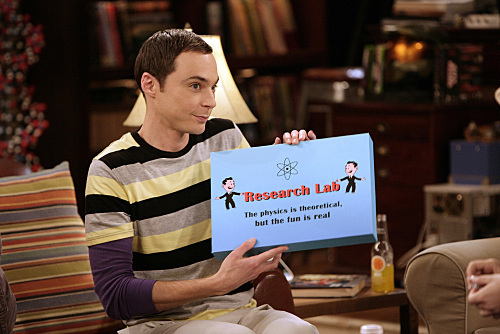
My flavor of the month, lately, has been episodes of CBS's The Big Bang Theory. It's not always the most well written and you find after watching several episodes back-to-back, that they don't vary much in their basic formula. However, I'm pretty "tickled" (who uses that word anymore?) by the character Sheldon Cooper.

Yeah, yeah, everyone thinks he's great and hilarious and Jim Parsons has won about 3 million Emmys for the role if that's any proof. But the reasons I love him may differ from most. With his debilitating social challenges, lack of ability to express or perceive emotions, extreme OCD tendencies (same seat on the couch, always knocking on a door 3 times, strict food preferences), impeccable math and scientific reasoning skills, and love for all things nerdy, it's impossible to ignore the fact that the character of Sheldon Cooper is based off of someone with autism. Rarely am I watching the show thinking these geeky scientists are "so ridiculous!". Most of the time I'm thinking they are "so every kid and adult with an Autism Spectrum Disorder I've worked with in my life!"

There are students in particular that come to mind when I think of the show, and they're none other than my favorite English class alumni, Ryan and his best friend, Allen (not previously mentioned, I'm surprised to say) . The very best of friends, and undoubtedly cut from the same cloth, Ryan and Allen travel the halls together perpetually engrossed in conversations about Star Wars, Pokemon, and Kirby for Wii. They walk into class tossing around "Lord of the Rings" themed jokes and are silenced only at the teacher's request. In unison they break into hysterics over the teachers' puns or simple wordplay (once again, I refer you to the "Eggs Benedict--Good Speaking Eggs" incident). The end-bell hasn't even finished ringing before they're out of their seats and throwing around theoretical scenarios for Mario and Luigi in non-existent levels of the video game.

Before I even ever invested in the story line between Leonard and Sheldon, I vowed that Ryan and Allen would be room mates some day. More and more now I find myself connecting the dots between my former students and their television complements.

The first day back, I had the honor of getting caught walking right in front of the boys during a passing period. Their conversation was true-to-form.

Ryan: Hey remind me to bring the "Physics of Star Trek" book tomorrow.
Allen: Oh yeah, and I'll bring [nerdy graphic novel, the name of which I'm blanking on].

At that point, Ryan spotted me ahead walking in front of him and caught up to my side. For the following exchange, feel free to substitute a mental image of Sheldon Cooper.

Sheldon--I mean Ryan: Why should Windows XP be a prison guard?
Me: Oh, well, hello to you too, Ryan! Nice to see you...my break was GREAT! Thanks for asking!
Ryan (no emotion): I'm trying to tell you a joke.
Me: Okay, go for it.
Ryan: Why should Windows XP be a prison guard?"
Me: Why?
Ryan: Because it always locks up.
Me: [forced laughter] Good one
Ryan: It's true.

If only I could the kid to finish with "Bazinga!", we'd be golden.

Thursday, December 15, 2011

The Giver, Special Ed.(ition) II


Despite the bizarre-o nature of "The Giver", one thing I enjoy about teaching it is the surprising application points. I love seeing the students freak out trying to grapple with a world of incomprehensible rules and limitations. They just refuse to accept such a society could ever exist, and the struggle keeps them constantly engaged in the story.

The injustices of the main character--Jonas's--hyper-controlled and ruthless society make the kids a little bit more grateful for the freedoms they experience, as well as how easily they get off the hook for mistakes or misbehavior. It's also an underhanded way for me to dig at them about the implications of their anti-social/defiant behaviors. In Jonas's world, so much as missing a homework assignment would be a serious offense, and those who intentionally commit crimes are released--or excommunicated--from the community. On more than one occasion, I've all but directly stated that were these students part of that alternative reality, they would have been booted years ago.

Harsh, Ms. T!, I'm sure you're thinking. But, it's only fact--a fact that even they have owned up to.

In The Giver citizens of the community do not choose their jobs. Rather, they are assigned by the Committee of Elders who decide the career path of each person by observing him or her from a young age to determine demeanor and aptitude. Children are assigned their jobs and begin vocational training at the age of 12, and they are destined for a lifetime under that assignment until old age. I used this concept in the novel as a platform to nudge my own 12-year-old students to evaluate the ramifications for their own (mostly poor) choices and behavior if they were in Jonas's world and facing their job assignment. Because, in Jonas's world, those who display intelligence, or promise, or passion have the potential for jobs like scientist, or caretaker for the elderly. Those who are not so bright or lazy or deviant are assigned much less prestigious jobs, like birth-mother (Huh, what? Yeah, that could be a whole blog post on its own).

My not-so-covert suggestions that my students would fall low on the totem pole were aimed at one of them in particular.

As far as a picture of the typical student goes, Brent would be the anomaly. From the past year and a half teaching him, and from the rumblings I've heard regarding his performance in previous grades, Brent has made it abundantly clear his aspirations for an educational career. Let me tell you, they are pretty small, if not non-existent. Bright, quick-witted, and perceptive, Brent is completely cognizant of the damage he is doing by making his own daily schedule at school, which doesn't often align with what the teachers have planned, and more often than not involves sabotaging their plans. If his approach to school is any indicator of his approach to life (which grows more likely the older he grows), Brent's future will be a troubled one.

Feeling particularly frustrated with Brent the day we stumbled upon this disturbing stipulation of the "utopian" society, I very much meant to infer that were he not released for his disobedience, he would end up a menial laborer of some sort. Of all the outspoken, unfiltered mouths in the classroom with the potential to state exactly what I was thinking, but couldn't say, I didn't quite expect Brent to be the one to do the job for me.

"Poop cleaner. I'm pretty sure I'd be the guy who ended up poop cleaner."

There was a round of consenting nods from the rest of the class as they settled on the very appropriate outcome for Brent. I opened my mouth to add my two cents, but realized that he had truly said it all.

If Know-er of the Cold Hard truth were a job assignment in The Giver, Brent might have found his calling in life.

Sunday, December 11, 2011

Don't know what you got 'til...

When I found myself unexpectedly thrown into the ED/BD (Emotional Disorder/Behavioral Disorder) domain four years go, I tried to face the daunting task by convincing myself students of this nature afforded an opportunity I wouldn't find with other special education populations. That sunny view was that, unlike many "special needs" people, these kids had the intellect and social awareness to acknowledge what a positive influence I was in their lives, and that, once we had developed a solid bond and mutual trust, we would develop a lovely little classroom family based on their admiration and respect for me.

Clearly, I was having delusions of grandeur. By the end of the first quarter of my first year teaching, I had come to a grim understanding about my impact. The naivety to believe I could undo twelve years of dysfunction and transform these children into my little walking legacies in 9 months was, what I imagine, a classic rookie mistake that chases teachers who are weaker (or perhaps less crazy) than I from the field very early in the game.

At my second--and current--job, I found myself repeating the offense with a little less hardened, albeit still very challenging, community of kids. For all the blood, sweat, and tears I had put into lovingly disciplining them to be better people, many days it felt as if they might as well have never even met me. It takes a little air out of your balloon when you spend a week engaged in heart-felt discussions about bullying and then a day later you find out someone got caught doing just that.

But I don't go completely unrewarded in terms of expressed appreciation from the students. There is a specific formula which almost always guarantees the desired results, and here it is:


Leave.


I've never found my students to be so captured and concerned for me than when I announce an anticipated absence. Where am I going? Why? How long will I be there? Who will be in my place? It doesn't matter how capable, self-sufficient, or in control the sub is. I inevitably return from being away to hear that something has gone awry in my absence, and even hear first-hand from the kids about the gaping hole in their day where I should have been.


This past week I had an unexpected meeting with a parent right before my 8th period class was to begin. Most of those students are with Annie during 7th period in our room when I have plan time, so they are very used to seeing me working at my desk, then watching me walk out of the room a few minutes early to where I teach them English. At the bell they head to 8th period class and find me there preparing and awaitingtheir arrival.

Knowing this impromptu parent-teacher conference could go longer than just a few minutes, I warned the aide in my 8th period class that I may be pretty late and he'd have to hold down the fort. Fortune would have it I escaped the meeting rather quickly and ended up back at English class only five minutes later than normal.

But the reception I received when I walked through the door may as well have been a "Welcome Back" celebration from a year overseas. "Miss T!!!" a few of the boys screamed in unison, as the aide--John--approached me with wide eyes.

"Wow, Miss T," he exclaimed. "They sure were worried about you." I beamed and gloated inwardly a bit as I imagined their mild agitation at my unexpected disappearance and the confusion that ensued. All this seeming unnecessary commotion about being MIA for five mere minutes. Most middle school students think they're scoring the jackpot when their teachers go *poof*. But these are no ordinary middle school students (if you haven't figured that out yet).

Consistency--that's what it all boils down to. I bring to the table six years of undergrad and grad school teacher training, my clever behavior management strategies, my engaging lessons, my penchant for wit, and that's all good and fine. But, if there is one single most important thing I do to touch these kids' lives, it's showing up on a daily basis. For a group of boys and girls who are tossed from parent-to-parent, or see family members come and go through the proverbial revolving door, or often don't know what unpleasantries they will find when they go home each night, the simple promise that I'll be standing at the Smartboard first period hassling them about their homework, is a crucial comfort that sometimes they don't even recognize.

The result of this realization: a little less pressure, a little more humility. The former, because even on the days I feel like chopped liver to those kids or worse--the target of their anger and loathing--I know that just being there, and staying the course with them has done wonders. The latter, because I am suddenly reminded of my place. I have believed for a long time now, and still sincerely believe, that I was called to this profession for a purpose. But any faint expectations that it might elevate me to the sort of glory worth making into a motion picture (a la Freedom Writers), I've had to squelch. My purpose does not necessarily involve some major breakthrough in the teaching profession, or even major breakthroughs in the lives of children. Perhaps my purpose is simply a presence--a constant vigil over a classroom that brings some stability to my students and my school at-large.

So, it seems to me that my best chances at making an impact don't lie in going all Michelle Pfeiffer on my kids. It's all about my integrity and commitment--even on the days I'm not particularly feeling like Teacher of the Year.

And taking an impromptu day of absence every once and awhile can't hurt either.


Wednesday, December 7, 2011

The Giver, Special Ed.(ition) Part 1

Oh, no. It's back. The collar-tugging-ly uncomfortable novel by Lois Lowry that reads like a kids movie with an R rating.

Why we chose to re-adopt into our curriculum a book which is often banned in middle schools, I'm not so sure. I mean, I'm all for a controversial text if it challenges students' perceptions of the status quo. But, it makes it really difficult to develop skills of literary analysis when the students are laughing nervously over the portrayal of a world where the "Stirrings"--in other words the...um...urges of pubescent children are suppressed with a daily pill. (Gosh, that was tough to even write.) My students have enough deviant thoughts already planted in their head without the notion of volunteer twelve-year-olds required to sponge bathe and towel dry naked elderly people. (Heck, I don't think I need the notion planted in my head.)

Still, there are some redeeming qualities of this unit. Such a twisted tale is guaranteed to engage the students. I love witnessing their shock and awe at the horrors of a supposed utopian society--one so uniform and regulated that any diversity, creativity, or passion has been virtually sucked dry from its inhabitants. At the time of its inception-1993-the aversion to such political structures was the hot topic.

My hope was to masterfully lead the students to the understanding that this story is a commentary on real-life societies with similar attributes and then bask in their collective gasp of amazement of what goes on beyond the borders of their comfy, cosy lives. Unfortunately, I didn't know who all I was dealing with.

Harry is new to the school, and has revealed himself to be quite the old soul. During a fiery meltdown with one of the aides, he expressed his distaste for the netbooks assigned to every student, by screaming: "What kind of a**-backwards school is this?! Why don't they let us use paper and pencils like everybody else?!"

When he joined my English class a few weeks I should have figured, then, that he would have plenty of old-soul wisdom to impart. After remaining silent and generally unparticipative through the first few chapters, I believe it may have been the mention of everyone in the community wearing the same, neutral colored tunic, that set Harry off in a good-natured, yet very similar fashion to his previous outburst.

"What kind of place is this?!" he began. "Soviet Russia, or something?!"

Though I pretended to remain unfazed, inwardly, my jaw hit the floor. I just had my first real education on communism from Eastern Europe tour this past summer, and I had a twelve-year-old intuiting mention of a political regime that ended more than a decade before he was born.

"Yeah, Harry. It pretty much is."

And here I thought I wasn't getting a student teacher until next spring...